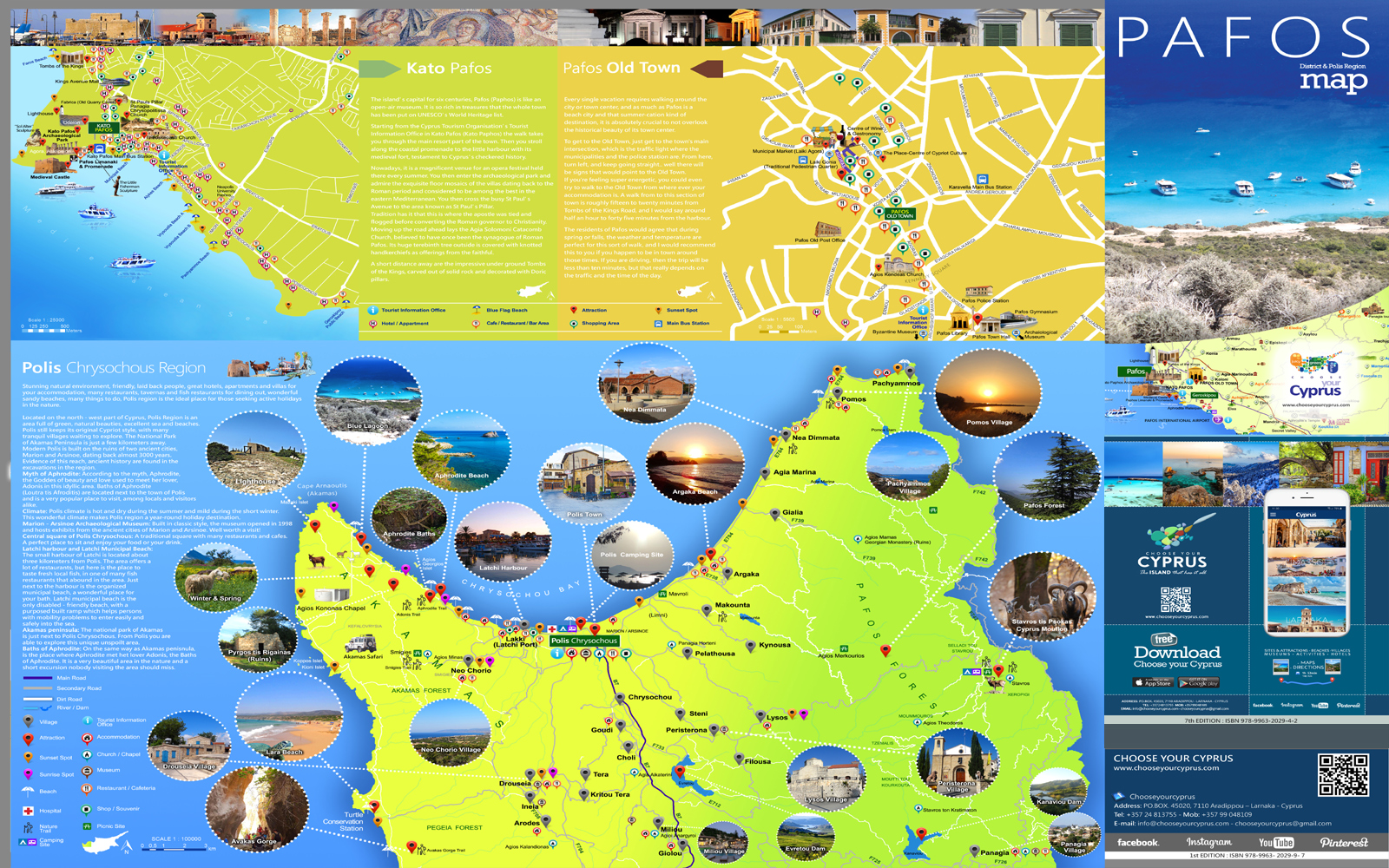
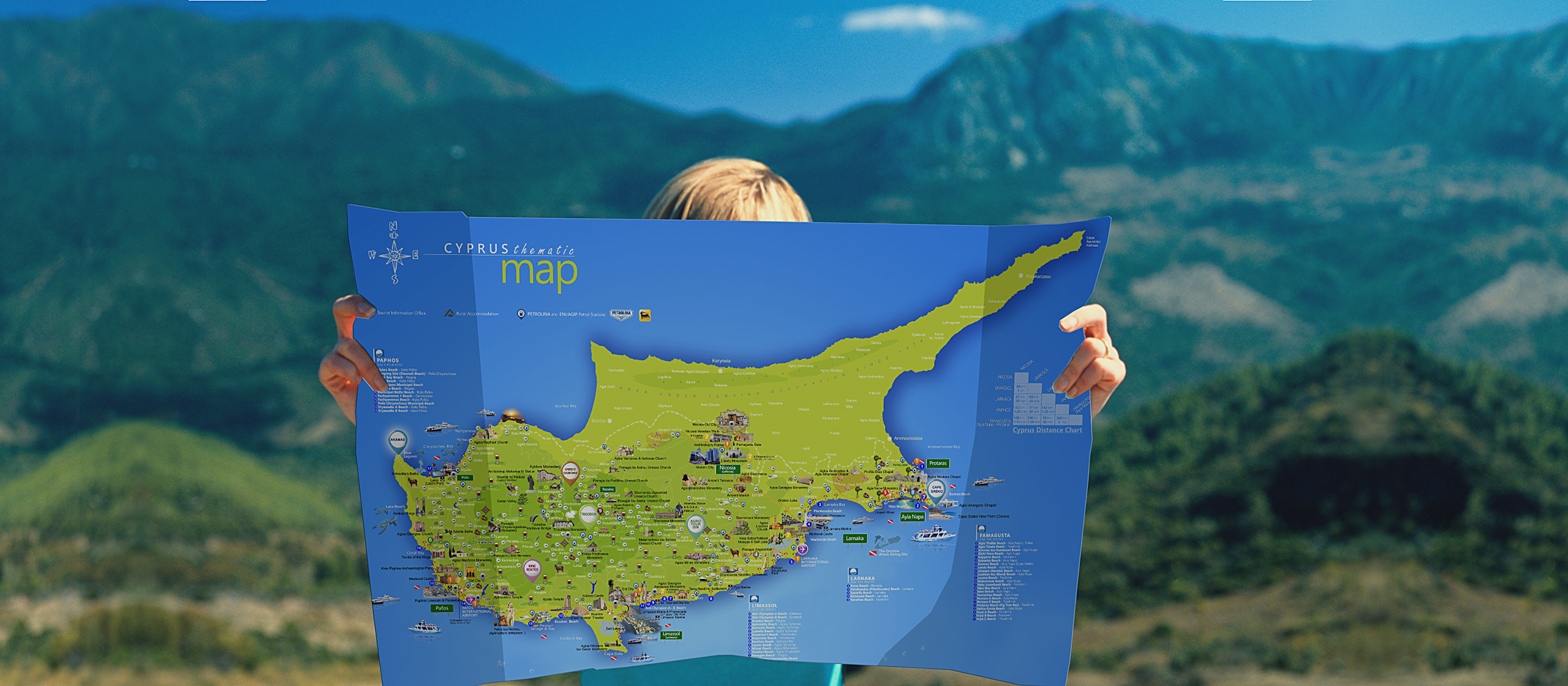
The island’s capital for six centuries, Paphos (Pafos) is like an open-air museum. It is so rich in treasures that the whole town has been put on UNESCO’s World Heritage list.
Starting from the Cyprus Tourism Organisation’s Tourist Information Office in Kato Paphos (Kato Pafos) the walk takes you through the main resort part of the town. Then you stroll along the coastal promenade to the little harbour with its medieval fort, testament to Cyprus’s checkered history. … Nowadays, it is a magnificent venue for an opera festival held there every summer. You then enter the archaeological park and admire the exquisite floor mosaics of the villas dating back to the Roman period and considered to be among the best in the eastern Mediterranean. You then cross the busy St Paul’s Avenue to the area known as St Paul’s Pillar. Tradition has it that this is where the apostle was tied and flogged before converting the Roman governor to Christianity. Moving up the road ahead lays the Agia Solomoni Catacomb Church, believed to have once been the synagogue of Roman Paphos. Its huge terebinth tree outside is covered with knotted handkerchiefs as offerings from the faithful.
A short distance away are the impressive under ground Tombs of the Kings, carved out of solid rock and decorated with Doric pillars. On the way back you can enjoy a relaxing visit to the aquarium.
Stunning natural environment, friendly, laid back people, great hotels, apartments and villas for your accommodation, many restaurants, tavernas and fish restaurants for dining out, wonderful sandy beaches, many things to do, Polis region is the ideal place for those seeking active holidays in the nature.
Located on the north – west part of Cyprus…. Polis Region is an area full of green, natural beauties, excellent sea and beaches. Polis still keeps its original Cypriot style, with many tranquil villages waiting to explore. The National Park of Akamas Peninsula is just a few kilometers away.
Modern Polis is built on the ruins of two ancient cities, Marion and Arsinoe, dating back almost 3000 years. Evidence of this reach, ancient history are found in the excavations in the region.
Myth of Aphrodite: According to the myth, Aphrodite, the Goddes of beauty and love used to meet her lover, Adonis in this idyllic area. Baths of Aphrodite (Loutra tis Afroditis) are located next to the town of Polis and is a very popular place to visit, among locals and visitors alike.
Climate: Polis climate is hot and dry during the summer and mild during the short winter. This wonderful climate makes Polis region a year-round holiday destination.
Marion – Arsinoe Archaeological Museum:Built in classic style, the museum opened in 1998 and hosts exhibits from the ancient cities of Marion and Arsinoe. Well worth a visit!
Central square of Polis Chrysochous: A traditional square with many restaurants and cafes. A perfect place to sit and enjoy your food or your drink.
Latchi harbour and Latchi Municipal Beach: The small harbour of Latchi is located about three kilometers from Polis. The area offers a lot of restaurants, but here is the place to taste fresh local fish, in one of many fish restaurants that abound in the area. Just next to the harbour is the organized municipal beach, a wonderful place for your bath. Latchi municipal beach is the only disabled – friendly beach, with a purposed built ramp which helps persons with mobility problems to enter easily and safely into the sea.
Akamas peninsula: The national park of Akamas is just next to Polis Chrysochous. From Polis you are able to explore this unique unspoilt area.
Baths of Aphrodite: On the same way as Akamas penisnula, is the place where Aphrodite met het lover Adonis, the Baths of Aphrodite. It is a very beautiful area in the nature and a short excursion nobody visiting the area should miss.
Explore the Akamas Peninsula
The Akamas National Park lies on the west coast of Cyprus, a truly pictorial part of the island. It has an area coverage of 230 square kilometres containing valleys, gorges and wide sandy bays. The wildlife diversity is crucial for the ecology in the Mediterranean.
Explore the Akamas Peninsula
The Akamas National Park lies on the west coast of Cyprus, a truly pictorial part of the island. It has an area coverage of 230 square kilometres containing valleys, gorges and wide sandy bays. The wildlife diversity is crucial for the ecology in the Mediterranean. In this spectacular environment there are 168 varieties of birds, 20 different reptiles, 16 species of butterfly and 12 different mammals not to mention its very rich variety of fauna. The important significance of the Akamas Peninsula has been duly noted; The European Council has included it in its Mediterranean Protection Programme. The Cyprus Government has yet to fully declare it as a National Park for tourist and local landowners reasons, although friends of the Earth and Green Peace are lobbying hard for it.
– The last coastal area in Cyprus to remain untouched by development
– A perfect haven for wildlife and flora
– A MUST for any keen walker or mountain biker
Boat along the Akamas ( Blue Lagoon )
Blue lagoon is the most popular place of Akamas and thousands of people have visited it by boat. The crystal blue waters in this small bay are so clear, you can see all the way to the underlying sea bed.
Boat along the Akamas ( Blue Lagoon )
Blue lagoon is the most popular place of Akamas and thousands of people have visited it by boat. The crystal blue waters in this small bay are so clear, you can see all the way to the underlying sea bed. The water in this area of the Akamas Peninsula is so inviting and refreshing you will want to swim in this beautiful environment or go snorkeling and look around you underwater for metres on end.
– Choose an organised trip with a BBQ lunch cooked on board – book at the harbour
– Or hire a private speed boat – it’s good value for a small group
– Don’t forget your swimming costume for that dip in the blue lagoon!
– Tip: Local residents receive a discount – just ask at Latchi harbour when you book
This route is in the north-western part of Cyprus. It is of unique interest, as it is not devoted exclusively to wine. In this area, the wine lover and the gourmet can visit four wineries and taste their varied and individualistic wines, in combination with the tasty specialities of Cypriot food.
This route is in the north-western part of Cyprus. It is of unique interest, as it is not devoted exclusively to wine. In this area, the wine lover and the gourmet can visit four wineries and taste their varied and individualistic wines, in combination with the tasty specialities of Cypriot food. Tavernas, of which there are plenty along the route, will be sure not to disappoint. Together with these delicious attractions, the visitor may enjoy a unique geography, unlike anywhere else on the island. Travel along the main roads E701 and E709, which climb to elevations providing some fascinating views, with various greenery, substantial expanses of forest and a liberal lacing of vineyards combining to attract our attention. The outstanding feature of this unique wine zone is the Akamas peninsula. The diverse characteristics of the Akamas morphology, the flora and the wildlife rightfully make it a rare habitat. The visiting explorer/wine-lover truthfully has a feast for the eye, the ears, and the taste-buds.
Go on an adventure to cedar valley & Stavros tis psokas in Paphos forest
The area is located in the northwest part of the Troodos mountain region. Its boundaries overlap with the boundaries of the Main Forest of Paphos, which represent 96% of the site. It covers a large area from sea level up to the peak of Tripylos at 1,352 metres. This particular area is the most important area of Cyprus for nesting raptors. It supports the highest number of breeding Bonelli’s eagles and Goshawks.
Cedar Valley: A must for nature lovers, Cedar Valley in Tilliryan Troodos is a thing of beauty. However, the cedars in this secluded valley are no ordinary trees, but the indigenous Cyprus cedar – Cedrus brevifolia, a close relative of the famous cedars of Lebanon, and which number in the thousands here.
Stavros tis Psokas (Cyprus Mouflon): This area contains the Cypriot mouflon (a wild sheep, Ovis musimon, inhabiting the mountainous regions of Sardinia and Corsica, the male of which has large curving horns considered native and unique to Cyprus). This breed of animal was almost extinct during the 20th century, yet the moufflon is now healthily populated within the Paphos Forest, Cedar Valley, and particularly the Tripylos area. Near the Stavros tis Psokas Forest Station, there’s a Moufflon enclosure near which will be featured in an upcoming blog post.
– A new tarmac road now takes the pain out of getting there (via Panagia).
– Make sure you walk up to Tripylos from the picnic site in Cedar valley – the views from 1362m are spectacular.
– Stop at a monastery to sample the “home brew” (wine!) on the way back – Chrysorrogiatissa or Ayia Moni.
– And stop in Panagia to see where Archbishop Makarios was born.
Polis Town
Located within a rich fertile plain in the foothills of the Troodos mountains, the small town of Polis, which in Greek simply means ‘town’, overlooks the beautiful bay, with its warm, clear and safe seas.With its quaint sandstone buildings around a pedestrianised town centre with its restaurants, bars and souvenir shops, it is a delightful place to hang out on a summer evening.
Polis Town
Located within a rich fertile plain in the foothills of the Troodos mountains, the small town of Polis, which in Greek simply means ‘town’, overlooks the beautiful bay, with its warm, clear and safe seas. With its quaint sandstone buildings around a pedestrianised town centre with its restaurants, bars and souvenir shops, it is a delightful place to hang out on a summer evening. Don’t miss the Church of Agios Andronikos near the town square, with its 16th century wall paintings, which for 400 years served as a mosque and today stands as a monument. The 18th century church of Agia Kyriaki is also interesting or the open-air naive sculptural exhibition. The small church of Agios Nikolaos in the pedestrian precinct is also used for Catholic masses. A small eucalyptus wood lies between the town and the sea, providing shade for a camping site by the beach. Polis is a 45 minute drive from Pafos airport and just over two hours from Nicosia.
Officially, the town’s full name is Polis Chryssochous, which means the ‘town of gold’, thanks to the nearby copper and gold mines. It is believed that Mycenaean Greeks first settled in the area about 3000 years ago, while legend has it that returning heroes from the Trojan war established a city here. One of Cyprus’ ten great city-kingdoms, called Marion, flourished here thanks to the nearby mines and the resulting trade. Marion had strong ties with Athens but subsequently fell to the Persians. When Kimon, the great Athenian general, tried to free Cyprus from the Persians, Marion was the first city he liberated. A statue in memory of Kimon stands in front of the Polis cultural centre. Later Marion was destroyed during the success struggle following Alexander the Great but was finally rebuilt by Ptolemy II who renamed it Arsinoe after his wife and sister. The Polis archaeological museum in the heart of the town has finds from Polis’ glorious past. The ruins of this great ancient city, Marion-Arsinoe, can be seen near the hospital.
– The Polis Archeological Museum is open every day and closed on Sunday. Opening hours: Monday – Friday: 8.00-16.00 Saturday: 9.00 – 15.00 Tickets: € 2,50
– Agios Andronikos church, open only on Sunday 09:00 – 16:00 Entrance: free
Polis Villages ( Agrotourism )
The rest of the area is made up of a number of villages with varying degrees of charm and reasons to visit. Below is a list of the ones we have been to and any particular points of interest. There are many places to stay in these locations particularly villas.
Polis Villages ( Agrotourism )
The rest of the area is made up of a number of villages with varying degrees of charm and reasons to visit. Below is a list of the ones we have been to and any particular points of interest. There are many places to stay in these locations particularly villas.
On the road from Paphos to Polis, about 13 km before you reach Polis, there is a turning on the left which will take you to the little village of Miliou nestling on the Laona plateau. Right next door to the springs is the restored monastery of Agii Anargyri which is now being used as a spa hotel. The monastery was built in 1649 and is said to be one of the first ever on the island. It was founded by two brothers who used to care for the sick and dying without taking any payment for it. It is said that this is how the monastery got its name, from the Greek meaning ‘without payment’. Miliou is one of the smallest villages in Cyprus and has a population of about 60. It is also one of the greenest villages in the area, thanks to an abundant supply of spring water, surrounded by citrus groves, almond trees and vineyards. In early spring the almond blossom is a spectacular sight and the Orange and lemon trees are laden with fruit. With far-reaching mountain and valley views and unspoilt countryside, Miliou is a delightful rural setting, perfect for long walks and for those who love nature and bird watching as the village is renowned as a nesting site for nightingales.
Pomos is about 8 miles or so outside of Polis. It is a charming little village, with a number of restaurants. There is a small fishing harbour and spectacular views, and is a great place to spend the afternoon.
Neo Chorio is a short drive from Latchi, and is the entrance to the Akamas. It offers a number of places to eat, and lots of different types of accommodation. It provides stunning views of the coast and the Akamas. It is claimed by some of the locals that land here is the most expensive in Cyprus.
The picturesque village of Droushia with its traditional architecture, narrow streets, small coffee shops, museums and Byzantine churches largely preserves the genuine traditional community unaffected by modern day civilization. With 386 inhabitants, the village stands 600 meters above sea level in a unique island region, which is rich in natural wellness right at the outskirts of the famous Akamas peninsula. The village, situated at the Laona plateau and only 27 km from the town of Paphos and 10 km from Polis, is a lovely location with stunning seaside and mountain views. Due to its altitude, a cool breeze coming from the Akamas Peninsula refreshes the village. In fact, one legend suggests that the village derives its name from the Greek word “Drosia” meaning “cool and fresh”. If you are wondering what to do during your stay, you’ll be happy to know that there are plenty of sites and attractions to visit.
Drive up to Pomos & Pachyammos villages ( Saint Rafael Church )
The areas near the small villages of Pomos and Pachyammos are majestically beautiful and the mountains lead straight into the sea. Pomos village, hanging on the cliffs of west coast Cyprus, lies about 20 km afar from Polis Chrysochous, on the way to Akamas nature reserve.
Drive up to Pomos & Pachyammos villages
( Saint Rafael Church )
The areas near the small villages of Pomos and Pachyammos are majestically beautiful and the mountains lead straight into the sea. Pomos village, hanging on the cliffs of west coast Cyprus, lies about 20 km afar from Polis Chrysochous, on the way to Akamas nature reserve. It is a laid back village very peaceful and quiet. It is ideal for those wanting to live the authentic Cyprus way of life, away from the hassle and bustle of tourist’s resorts. This tranquil and calm area prides itself with amazing views of the coastline and sandy beaches, making it the ideal place for rest and relaxation. Pomos is one of the remaining unspoiled and undisturbed areas of Paphos. An ideal location to get away from it all.. The main point of interest is the impressive church of Agios Rafael in Pachyammos village, an important pilgrimage site for the faithful due to the belief in the miraculous curing powers of the saint.
Pachyammos Village Beach is an idyllic refuge for those seeking a remote and private stretch of bay to enjoy their day in tranquility.
Visit Latchi Harbour
In the past few years due to its ever-growing facilities and amenities, Latchi has become a favorite stopping point after the Greek Isles and Turkey. Latchi is a small port in Cyprus where the fishermen bring in the fresh catch of the morning and supply those who are fortunate enough to have got up early that day. Taverns litter the dockside offering the local specialty “Fish Meze” and at a very affordable price, unlike some of the other harbours around the island.
– Take a stroll along the marina
– Sample some freshly caught fish in one of the tavernas.
Water Sports
Splash about in the warm waters of the Mediterranean indulging in all kinds of water sports. Go water skiing or wakeboarding, or just bounce along in the wake of the boat on a donut or a banana.
The steady predictable westerly winds make it a great place for windsurfing, or sailing and you could also try your hand at kitesurfing.
– Scuba diving in the clear waters along the Akamas.
– Water ski behind a jet boat.
– Maybe sea-kayaking or even paragliding?
– All these watersports can be found down in Latchi.
Stunning Sunset & Sunrise
The beautiful surroundings and marvellous sunsets and sunrises make this area a special place for holidays. The best sunset experiences in Polis region, in specific areas such us Akamas Peninsula, Latchi Beach, Argaka Beach, Droushia village and Neo Chorio village. Another favourite for a sunset view is the coastal area of Pomos & Pachyammos villages.
Paphos or (Pafos), a town famous for its beauty and rich history from ancient times, is one of the towns one can explore and travel through time. The Old town Paphos, also known as Ktima. Within the old town you will find medieval, Ottoman and neoclassical builds demonstrating the island’s rich colonial history.
Why you should visit it?
This is the historic city center of Paphos and it is among the most charming places to walk around and explore. This Old Town was rehabilitated in 2017 to restore its public places and historical buildings so they have a great look. In 2017, the Old Town received funding to restore its historic buildings and public spaces, meaning it currently looks tip top. Dine outdoors, watch the sunset, and shop at Kennedy Square and Makariou Avenue. The latter’s known for its boutiques and farmer’s market.
Archi/ture
The unique architecture of the Public Library, the Town hall the District Administration of Paphos and the numerous neoclassical buildings
One of the neoclassical buildings of the area designed by the architect Andreas Christodoulides, is the Public Library.
Archi/ture
It was renovated in 2015 after an initiative by the municipality of Paphos with the help of The Cyprus Association of Librarians – Information Scientists (CALIS). Paphos’ Public Library opened its doors to the public in 1946, where it hosted many cultural activities.
Founded by the mayor of time Christodoulos Galatopoulos, who it was named after subsequently. It now holds 26,000 volumes, including historic documents and rare publications.
Working Hours:
Monday-Friday : 7:30-15:00
Saturday & Sunday : Closed
Municipal Gardens
In the same square you will find the Town Hall, another neoclassical building built within the Municipal Gardens. An architectural reference to ancient Greece with the Parthenon like columns. Another neoclassical historic building found in the old city, is the District Administration of Paphos, which was renovated during the city’s restoration.
Old Post office
Another 1920s build is the old Post office located next to the District Administration. Finally visit the ‘Palia Ilektriki’ (Old Powerhouse) Cultural Centre which has recently been transformed and hold various events.
Kennedy Square & Shopping Street
If you walk past the Public Library, you will find Kennedy square. This is the main square of Paphos where at times dance, music events and art exhibitions are hosted. The square was remodeled in 2017 adding a modern touch in the heart of the old town.
Archbishop Makarios Avenue
Archbishop Makarios Avenue is the main shopping street of the old city, with buildings dating from the 1920s. For the shopping enthusiasts, a walk down Archbishop Makarios Avenue shopping street will not disappoint. There you will find both high street shops as well as unique boutiques to satisfy all tastes.
Old Town Market
Shops selling leather shoes, jewellery, souvenirs, spectacles and sunglasses and designer labels and the Municipality fruit market. The Old town market is an experience that should not be missed. Built in the 1920s where meat, fish and vegetable traders sold their produce, it has now been transformed.
Take a stroll through the market to find unique shops selling leather shoes, jewelry, souvenirs, spectacles, sunglasses and designer labels and discover the Cypriot culture in person. Step out to the Municipality Market just next door and find an array of colorful fresh fruit, vegetables and local produce for a true taste of Cyprus.
‘Hani of Ibrahim’ and cypriot craftsmen creating local art
Located next to the town market the ‘Hani of Ibrahim’ entices the visitors to explore the neighbourhood. Abandoned in the early 1960s, the building was recently restored to combine modern architecture and traditional brickwork. Housing travellers and traders in the past, it now hosts unique workshops with distinctive crafts and local products.
Paintings, silk, porcelain and wood workshops
Explore the place to find paintings, silk, porcelain and wood workshops. Choose special jewellery inspired by Italian culture, ancient Greek mythology and the sea or handmade jewellery made from precious metals and stones. Incite your taste buds with exceptional carob syrup, traditional marmalades, honey and Cypriot sweets or for the savoury lovers discover Cypriot deli and cheese. Enjoy delicious deserts at the local bakery or a gourmet meal at the restaurant.
Religious interest monuments
ST. KENDEAS CHURCH, THE TURKISH BATHS & AYIA SOFIA MOSQUE.
Religion plays an important part in the Cypriot culture, hence the old city includes many religious monuments including the St Kendeas church, St. Thedoros church, the Ottoman baths and Ayia Sofia mosque. Saint Kendeas church was built in 1923 and opened officially in 1952. The Saint’s name is celebrated on October 6th and many visit the church on the day to worship him. Saint Theodoros church is located near the Byzantine Museum, built in 1896 and renovated in 1917 and 1923.
Religious interest monuments
Another important religious site is the Ayia Sofia mosque (Cami-i Kebir). The mosque is located in the Ottoman area of the old city, the Moutalos area. It combines medieval and Ottoman architectural elements. It was originally a Christian church dedicated to Saint Sofia and was converted to a mosque during Ottoman rule in 1571. Surrounding the mosque there is a Muslim cemetery. With just a few minutes’ walk you will discover the Ottoman baths, also known as Hamam baths. Located near the Market, the baths were built in 1592 and used until the 1950s, making them an important reference in the old city’s history. They were restored in 2015 by the Municipality and are part of the UNESCO heritage sites.
Musuems
The Paphos District Archaeological Museum houses a collection of finds from the Paphos (Pafos) region dating from the Neolithic Age to 1700 AD.
Working Hours: Monday-Friday: 08:00 – 16:00
Closed on weekends Entrance Fee: €2,50
Street Art
If you take a wander around the streets of old Paphos, you will occasionally stumble upon some random art installations. Most of them are situated in a small area to the west of Kennedy Square. However, there are a few others scattered around, so it pays to explore.
StreetArt Square is an annual event that takes place in Paphos Old Town. During the festival, street artists from all around the world are gathered in order to create their works on the walls of Paphos. Each year a different part of the town is chosen and parallel events such as concerts, conferences and screenings take place.
Sunset
The most magnificent sunsets over Paphos from the Old Town and Mouttalos Area.
End your stroll around the old town, at the Mouttalos Area and watch as the sun sets over Paphos, taking in the magnificent view.
Cafes, lounge bars & restaurants
Relax at one of the numerous cafes in the old city like the Hamam Café Lounge Bar. Fill your belly with delicious Cypriot food at one of the traditional taverns located within the old town.
Visit the Old Powerhouse at the heart of the old town and enjoy a meal, or visit the ‘Hani of Ibrahim’ for some gourmet meals. As the sun sets and the air mellows have a drink at one of the local bars while taking in the town’s fascinating beauty.
The coastal town of Paphos with its medieval fort and quaint harbor is harmonious combination of historical sites, tourist resort and wonderful countryside. It is a region where it combines mountainous areas and the sea. It harmoniously joins culture, contemporary life and historic… archaeological sites. The Maa-Paleokastro site near Coral Bay holds an admirable view. It is where the Mycenaean Greeks first landed in Cyprus during the Bronze Age. Travel further inland and go on a wine village tour, make sure to visit the Chrysorrogiatissa Monastery and admire its beautiful icons, and, taste the wine there- the Monastery produces wine from its own winery.
Enjoy any of the numerous activities on offer in the Paphos district, from sea sports, golf, diving, swimming, snorkeling, visit traditional villages- especially round the Polis area whilst sampling the long standing Cyprus cuisine and being charmed by the traditional architecture of the houses, explore the countryside, check out the water park, go carting; the list goes on.
The Akamas peninsula is a nationally protected area of untamed wilderness with awe-inspiring coastlines and sandy bays. Take in the panoramic views from the top. One of the last nesting grounds in the Mediterannean Sea for the Green-Back and Loggerhead turtles is located here; on Lara Beach. Walk on one of the numerous nature trails and explore the rare endemic plants and spot different migratory birds. A thoroughly memorable experience would be a boat trip along the awesome coastline which includes the famous Aphrodite’s Rock.
Top things to SEE & DO in Paphos
Paphos is now included in the list of quality coastal destinations of Europe and visitors can combine a relaxing, but also safe holidays, tradition and culture, nature and clean seas.
Stunning natural environment, friendly, laid back people, great hotels, apartments and villas for your accommodation, many restaurants, tavernas and fish restaurants.
The island’s capital for six centuries, Paphos (Pafos) is like an open-air museum. It is so rich in treasures that the whole town has been put on UNESCO’s World Heritage list.
It is the perfect place to combine first class holidays with a walk through history. Immerse yourself in the archaeology, history and culture of Paphos.
Paphos has its own divine beauty from beaches, in sea shades and many ”Blue Flag” awarded. Their number reaches 27 public, ideal for their friendliness towards families.
 Cities/District
 Troodos Mountains
 Agrotourism Villages
 Monasteries
 Unesco Churches
 Beaches
 Cape Greko N. Park
 Akamas N. Park
 Wineries
 Museums
 Activities
 Nature Trails
 Camping
 Wine Routes
 Christmas Customs
 Easter Customs
 Get Inspired
 Food & Drink
 Akamas to Troodos
 Limassol to Nicosia
 Famagusta to Machairas
 Kourion to West Akamas
 Hotels
 Villas
 Agrotourism Accommodations
 Cyprus History
 Flora and Fauna
 Learn Greek
 Blog
 Traveller’s Info
 Cyprus Maps
 Flights
 Rent a Car